
Why I’m Betting on Cookstoves While the World Watches Oil
Editor’s note. This is a guest contribution from Sandeep Melana, Project Manager at Econetix, working across our cookstove projects in the DRC, Uganda, the Philippines, and Vietnam. The views and on-the-ground observations are his.
Key Takeaways:
- Global LPG supply faces a multi-year structural squeeze from Middle East, Russia, and China-related disruptions. The “LPG bridge to clean cooking” is shortening, not extending.
- When LPG retreats, biomass advances. Household biomass cooking already accounts for 1.9 to 2.3 gigatonnes of CO₂-equivalent per year, comparable to entire G20 economies.
- May 2026 methodology updates (Gold Standard RECH v5.0, CDM TOOL33 v3) have repriced the cookstove carbon market. Geography is now the single biggest variable in project economics.
- Senegal, Tanzania, Philippines, DRC, Uganda and Vietnam are where the yield has relocated. India and Indonesia have been substantially repriced downward.
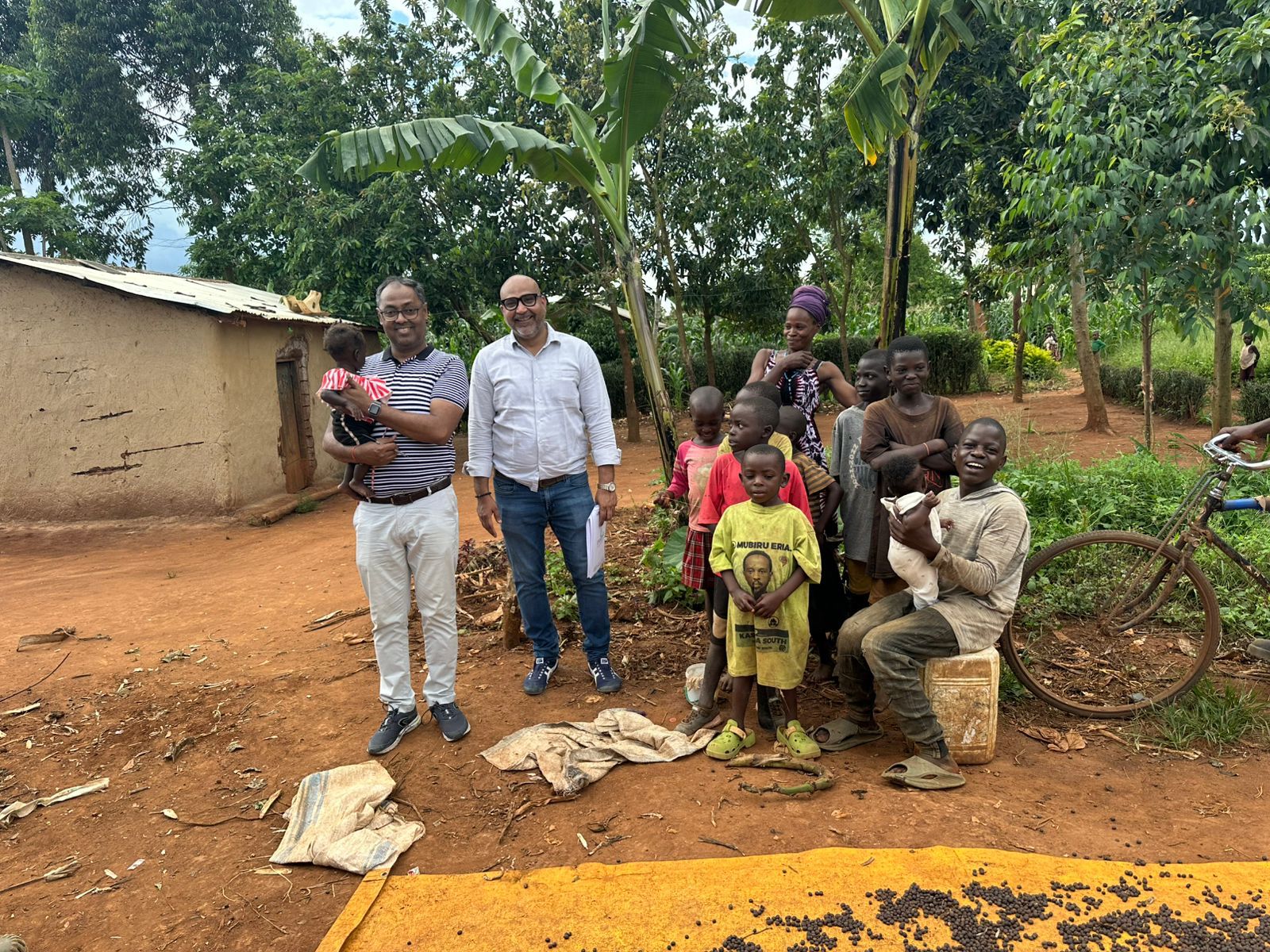
Last month I spent three days in a village in eastern Uganda. I sat with a woman called Hanifah while she boiled tea for her family of nine on a three-stone fire. Her kitchen had no chimney. Within thirty seconds my eyes were streaming. By the time the kettle was ready, my throat hurt. Hanifah had been breathing this every morning and every evening for forty-three years. Her three-stone fire is older than most LinkedIn climate-tech founders.
Hanifah owns no LPG cylinder. The deposit alone is two weeks of her family’s cash income. The refill is another week. A subsidised cylinder she cannot afford to refill is not, technically, clean cooking. The development sector calls it an “energy gap”. Hanifah calls it Tuesday.
This is not a unique story. It is the story of 2.3 billion people. The “clean cooking transition” you read about in glossy donor reports happens in cities. Mostly on slide decks. The further you drive from a capital, the more it disappears.
That disconnect is the foundation of an investment thesis I want to lay out, because the world is about to get much harder for the LPG bridge policymakers spent twenty years building, and the alternative is sitting in plain sight.
The Fuel Crisis Nobody Is Pricing Correctly
I believe we are at the start of a multi-year structural squeeze on global LPG supply. Two market dynamics are stacking up at once. If your base case for cooking fuel in 2030 still involves cheap, abundant LPG flowing reliably to East Africa, please update it.
Gulf and Red Sea shipping. The Strait of Hormuz remains the chokepoint through which roughly 20 percent of the world’s LPG flows, and contract propane prices have stayed at levels not sustained since 2008. Red Sea routing disruption forces tankers around Africa and adds weeks to delivery times. These dynamics are not resolving in months.
European LNG demand. European LNG demand has been structurally elevated since 2022, which pulls cargoes that previously went to Asia and puts a premium under global prices that did not exist before.
The result for a typical African or rural Asian household is simple: imported clean fuel will be more expensive, less reliable, and harder to subsidise. India’s flagship Ujjwala scheme now sees average refill rates of three to four cylinders per household per year against a needed twelve. Indonesia is rationing subsidised cooking gas. Senegal and Ghana have paused expansion programmes.
The LPG bridge is not getting longer. In many places it is getting shorter, or it was never finished being built.
When LPG Retreats, Biomass Advances
When LPG becomes unreliable, households go back to what they know: wood and charcoal. This is already happening. In rural Uttar Pradesh, reverse-switching rates of 35 to 40 percent are visible among first-generation Ujjwala beneficiaries. In Lagos, charcoal demand is climbing. In urban Kenya, a kilo of charcoal that cost 50 shillings five years ago is now 100. We are not, in other words, transitioning. We are oscillating.
More biomass cooking means more forest pressure, more household air pollution, more women walking for fuel. Household biomass cooking already accounts for 1.9 to 2.3 gigatonnes of CO₂-equivalent per year, somewhere between Brazil and Indonesia’s entire economies.
The improved cookstove is the obvious tool. A good forced-draft charcoal stove burns 40 to 50 percent less than a traditional jiko. A rocket wood stove burns 35 to 45 percent less than a three-stone fire. It pays for itself on fuel savings, health, and time recovered before anyone mentions carbon credits.
The Carbon Math Just Changed
The carbon revenue is what makes the math work at scale. And it changed materially in May 2026, in ways that mostly favour the people doing the work and disadvantage the people doing the spreadsheets.
Gold Standard published a new methodology, RECH v5.0, that is stricter on baselines, mandatory on stratified monitoring, and forces honest accounting for stove stacking (the very human habit of using the new stove and the old one side by side, which previous methodologies treated with creative optimism). In parallel, the CDM published TOOL33 v3 with official, country-by-country values for the share of avoided wood that genuinely counts as climate gain: the fraction of non-renewable biomass, or fNRB.
Project developers, charmingly, used to calculate this value themselves. Almost as charmingly, they tended to land in the 80 to 90 percent range. The new TOOL33 estimates it from satellite data. The numbers came back lower. Nobody is surprised.
The new numbers redrew the map.
Country | fNRB | What it means |
|---|---|---|
Senegal | 61% | Highest in West Africa; still room for new projects |
Philippines | 55% | The genuine surprise; underrated Asian geography |
Tanzania | 51% | Best Africa play after Senegal |
DRC | 42% | Strong national; sub-national zones go higher |
Uganda | 39% | Rural wood projects pencil out |
Vietnam | 36% | Clean Type C fuel-switch potential |
Indonesia | 9% | Old projects severely overstated |
India | 7% | Was 30%, now collapsed; legacy projects re-priced |
Source: CDM TOOL33 v3 (12 June 2025), national-level defaults.
A stove in Senegal or DRC now generates four to six times the carbon revenue of a stove in India for the same fuel saving. Geography just became the single biggest variable in cookstove project economics. I am told consultants who staked their pipelines on India and Indonesia are suddenly very interested in the Philippines.
The Four Geographies We Work In
Uganda. Rural penetration of clean cooking is under 5 percent. LPG does not reach the last mile and will not for the foreseeable future. Improved rocket wood stoves at scale, focused on northern and eastern districts. Economics work at 7 to 8 dollars per credit. Health and gender co-benefits are strong.
DRC. Urban Kinshasa, Goma, and Lubumbashi are charcoal markets. Sub-national fNRB in eastern conflict zones is materially higher than the national 42 percent, which makes a defensible project-specific calculation able to lift the project number into the fifties. Distribution risk is real, but per-stove yield is among the highest in the world.
Philippines. The surprise of the new TOOL33. Mid-tier cities and rural Visayas still cook on wood and lump charcoal. Distribution infrastructure is more developed than most African comparables, and project revenues can compete with Tanzania. Underrated. Possibly because the Asia cookstove conversation has historically been an India and Indonesia conversation.
Vietnam. Rural Mekong Delta and Central Highlands still use wood and rice husk. Existing pellet supply chains create a clean RECH fuel-switch pathway. Government policy is aligned.
All four have large, durable biomass-cooking populations that are not going anywhere on LPG within this decade.
Why the Window Is Now
The fuel crisis sustains biomass demand. The new methodology shrinks the supply of credible credits. New compliant projects take 18 to 36 months to come online. Integrity-sensitive buyers are already paying 8 to 12 dollars for high-quality cookstove credits, with premium projects clearing 12 to 16 dollars. I expect that band to push higher.
The window closes when LPG supply stabilises (7 to 10 years at best), methodology updates tighten yields further, or capital saturates the good geographies. None of these is imminent.
The Takeaway
If you are an investor reading “cookstove credit yields just collapsed” on Bloomberg, you are eighteen months behind. The yields did not collapse. They relocated. Senegal, Tanzania, Philippines, DRC, Uganda, Vietnam: that is where they went.
If you are a developer, the easy money is gone. The defensible money has been re-priced upward. Do the work: sub-national fNRB justifications, stratified KPTs, stove durability evidence. The auditor will read your KPT before they read your pitch deck.
If you are a corporate buyer, do not buy sub-5-dollar cookstove credits. They will not age well. Spend 10 to 15 dollars for projects that meet RECH v5.0 standards, or be the executive explaining in 2028 why your 2026 offsets are sitting in the Article 6 equivalent of an NFT punks wallet.
The window is the next five years. After that, somebody else will have deployed the stoves, written the case studies, and earned the credits.
I would rather it be us.
Talk to the Econetix team about cookstove credits from RECH v5.0-aligned projects across our four geographies. Request a project briefing.
About the Author
Sandeep Melana is a Project Manager at Econetix with over 17 years of experience in carbon markets, climate finance, and IRECs. He is known for combining field-level project experience with practical market insight, from cookstove factories in Africa to complex registry and carbon market structuring discussions.