SUCCESS STORY · ESG ADVISORY
How a Finnish logistics company, its owner Mutares and Econetix turned decarbonisation into a business case.
Most climate projects begin with a reporting duty. This one began with a simple question: can cutting emissions strengthen the business?
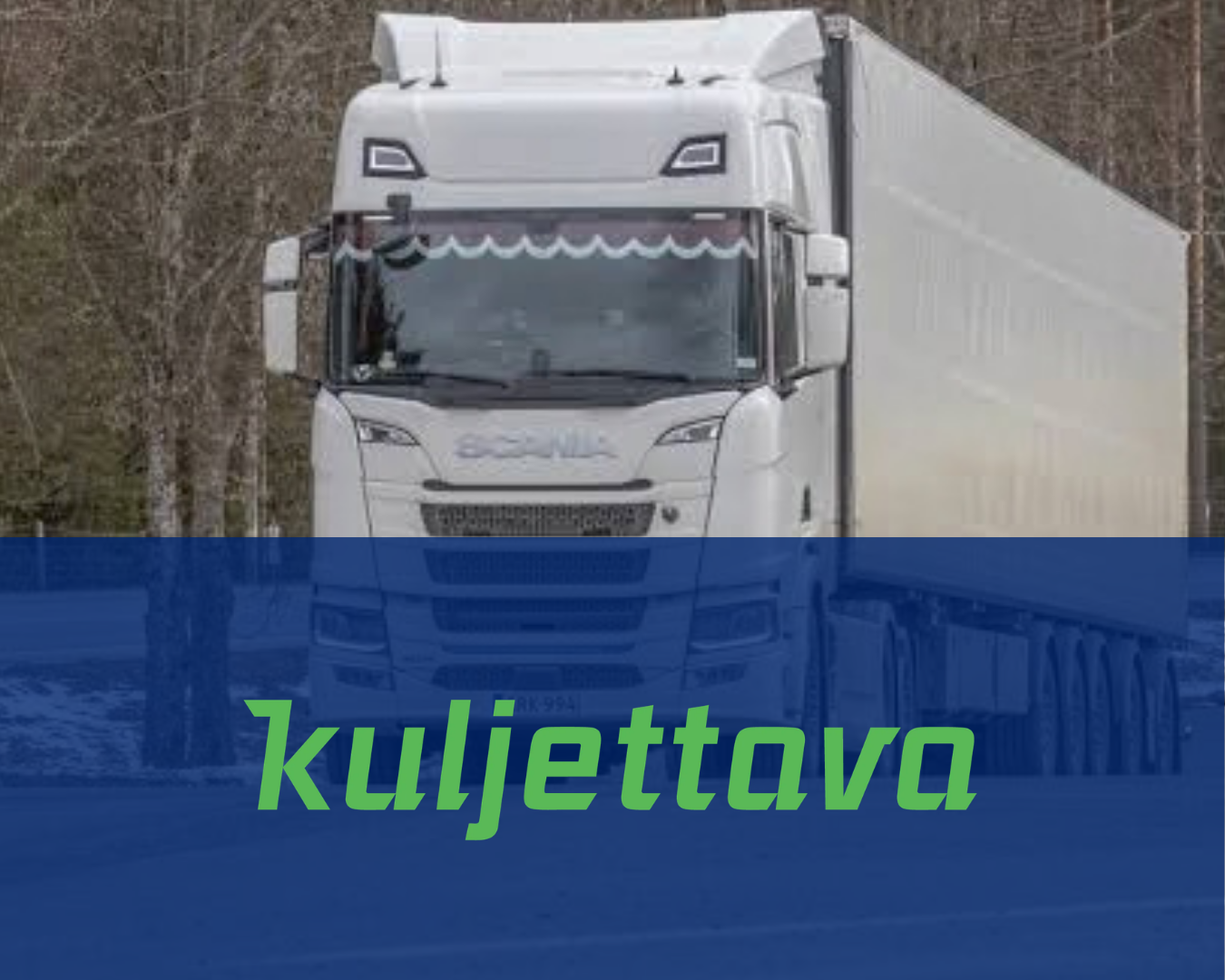
Kuljettava is a Finnish logistics company based in Kouvola. It moves bulk goods by road across Finland and runs warehousing alongside it, with a digital platform that gives customers visibility over their orders. Since December 2024 the company has been part of the portfolio of Mutares SE & Co. KGaA.
And like most road freight operators in Europe today, Kuljettava sits in a market where sustainability questions no longer arrive from regulators first. They arrive from customers, in tenders, procurement questionnaires and framework agreements. That is where Mutares, Kuljettava and Econetix came together: to treat decarbonisation as a business question rather than a reporting task.
Why ESG Reaches Road Freight Through the Customer
Logistics is one of the sectors where the sustainability conversation has moved fastest from principle to paperwork. A manufacturer reporting on its own value chain needs numbers from the carriers that move its goods. A retailer with a public climate commitment has to show where the transport emissions in its supply chain come from. A bank financing a fleet asks what the plan is for it.
None of that is abstract for an operator. It shows up as a question in a tender document, with a deadline, and a competitor who may be able to answer it better. The companies that have thought the topic through in advance are simply in a stronger position when the question arrives.
The difficulty is that road freight does not fit the standard ESG template particularly well. The material topics sit in operations rather than in policy: what moves, with which assets, over which distances, with which subcontractors, out of which sites. An assessment that does not start there produces a document nobody in the business recognises. At Kuljettava the baseline showed why: almost all emissions come from fleet operations, and fuel is the same lever that drives cost.
How the Collaboration Came About
Mutares and Econetix already know each other. The relationship began with offsetting the firm’s own travel emissions through certified climate projects and has grown into a standing partnership: Econetix supports the Mutares portfolio companies on ESG instead of being hired anew for every single report.
That changes the nature of the work. A classic consulting mandate arrives, assesses and leaves. Econetix works alongside the management teams of the companies themselves, sees the business the way the owner and the management see it, and is measured on whether the recommendations can actually be carried by the organisation.
Kuljettava was the next step on that path. The engagement was scoped together with Mutares and the Kuljettava management team, with a clear brief: understand the company as it actually operates, then show what cutting emissions means for a road freight business in commercial terms, and which measures pay for themselves first.
How We Worked: the Operation First, the Framework Second
The starting point was the operation, not the standard. Before any reporting framework entered the conversation, the work was about understanding how the company runs day to day, and which information already exists inside the business versus what would have to be built.
That meant working directly with the people who run it. Fleet, dispatch, warehousing and administration all hold pieces of the picture, and in a company of this size much of it lives in operational systems rather than in a sustainability function. Management was involved throughout rather than briefed at the end, which is usually the difference between an ESG document that gets filed and one that gets used.
From there the work followed a defined structure, agreed up front so both sides knew what the engagement covered and what it did not. Econetix pulled the picture together and brought the regulatory and market perspective; Kuljettava supplied the operational reality and checked every assumption against it.
What the Business Case Showed
The engagement first established a verified emissions baseline. Every reduction lever was then tested on the same footing: capital required, annual net benefit, cost or gain per tonne of CO₂ avoided and speed of impact. Each measure was judged like an investment.
The logic that emerged is one of sequence. Efficiency measures such as eco-driving and route optimisation pay back first and protect margins. The savings then finance the next step: selective fleet electrification and infrastructure partnerships with key customers. Emissions fall because the business gets stronger, not at its expense.
The work also looked at the requirements moving toward the sector from customers, financing partners and European reporting rules. Verified emissions data protects access to tenders and secures existing revenue, so transparency becomes a commercial asset.
The output was a consolidated report for the management team and the owner, written to be worked with internally rather than presented once and shelved. Its substance stays with Kuljettava and Mutares.
Why the Partnership Makes a Difference
Climate action only lasts when it pays its way in the operation it is meant to improve. A logistics company does not need a generic maturity score. It needs to know which of the many things it could measure and manage actually matter for its customers, its costs and its position in the next tender round, and in what order to approach them.
The partnership between Mutares and Econetix makes that possible. Mutares sets the direction as owner and brings the Kuljettava management into the work from the start. Econetix contributes method and market view. Together they keep every recommendation tied to what the company can carry and what its owner expects. For Mutares, it means ESG is handled consistently across holdings instead of being reinvented at every company. For the management team on the ground, it means a business case built with them, not handed to them.
That is the model Econetix applies across the Mutares portfolio, from Finnish road freight to industrial and service businesses elsewhere in Europe.
Want to Know What Cutting Emissions Is Worth for Your Operation?
Econetix works with companies and investors across Europe on carbon footprint calculation, ESG strategy, transition planning and offsetting through its own certified climate projects. If you are facing sustainability requirements from customers, investors or regulators and want a business case built on how your operation actually runs, get in touch.

