

CORSIA Phase 1: units must be cancelled by 31 January 2028
We hold 14.5 million tCO2e authorized for CORSIA and Article 6 in Uganda, DR Congo and Rwanda. Units from these projects go directly to airlines and commodity traders, without an intermediary.
Backed by our commitment to source equivalent eligible units as replacement, without repricing.
Settlement on delivery, staged payment against agreed milestones, or prepayment where it buys you a better price.
From authorizations that already run through CORSIA Phase 1 and Phase 2.
Documentation for compliance, treasury and procurement, in the format your tender or board paper needs.
Tell us where you stand and a CORSIA specialist comes back to you personally.
No obligation, and nothing is published about your position.
tCO2e authorized under CORSIA & Article 6
Host countries with a signed Letter of Authorization
CORSIA projects in operation and in development
From our own 10+ projects in 3 host countries.
10,000,000 tCO2e
2,750,000 tCO2e
1,766,234 tCO2e




and many more
New to CORSIA? Read the basics on our CORSIA page.
Authorization volumes refer to Econetix's wider CORSIA portfolio, not to this individual project.
Why the timing matters: Phase 1 closes, Phase 2 becomes mandatory.
130 participating States. The 2024 requirement is fixed at a sector growth factor of 15.4 per cent, the factors for 2025 and 2026 follow once ICAO publishes them. Emissions accrue until 31 December 2026 and eligible units must be cancelled by 31 January 2028.
Closed. Offsetting requirements were zero and the first monitoring, reporting and verification cycle was settled in 2025. Nothing left to do.
Mandatory from 1 January 2027, with 134 States defining routes subject to offsetting and exemptions for least developed countries, small island developing States and landlocked developing countries. Only four programmes are approved to supply units for 2027 to 2029, so authorization and vintage coverage need to be secured before the phase starts.
The question is not whether a tonne is good. It is whether it is eligible for your compliance period, whether it is tagged when you need it, and what happens if it is not. Every Econetix offer answers those three in writing.
Our units come from Gold Standard and Verra, two of only four programmes approved for 2027 to 2029.

Every offer carries an eligibility guarantee for the compliance period the units are sold for, in the commercial terms rather than in a footnote.
If delivered units fall short of the agreed eligibility, we replace them from our own portfolio of 10+ projects in 3 host countries, without repricing and at no extra cost.
Spot settles on delivery. Forward offtakes use staged payment against agreed milestones, and prepayment is available where it improves your price. Pricing is fixed or referenced to the ICE CORSIA Phase 1 contract, stated in the offer.
Tagged units are transferred to your registry account by the agreed date, with serial numbers. We can also handle the cancellation in your name, with the certificate and the trail your administering authority expects.
Three of our authorized projects. Volumes are the maximum authorized under each Letter of Authorization, available tonnage per vintage is confirmed in your offer.
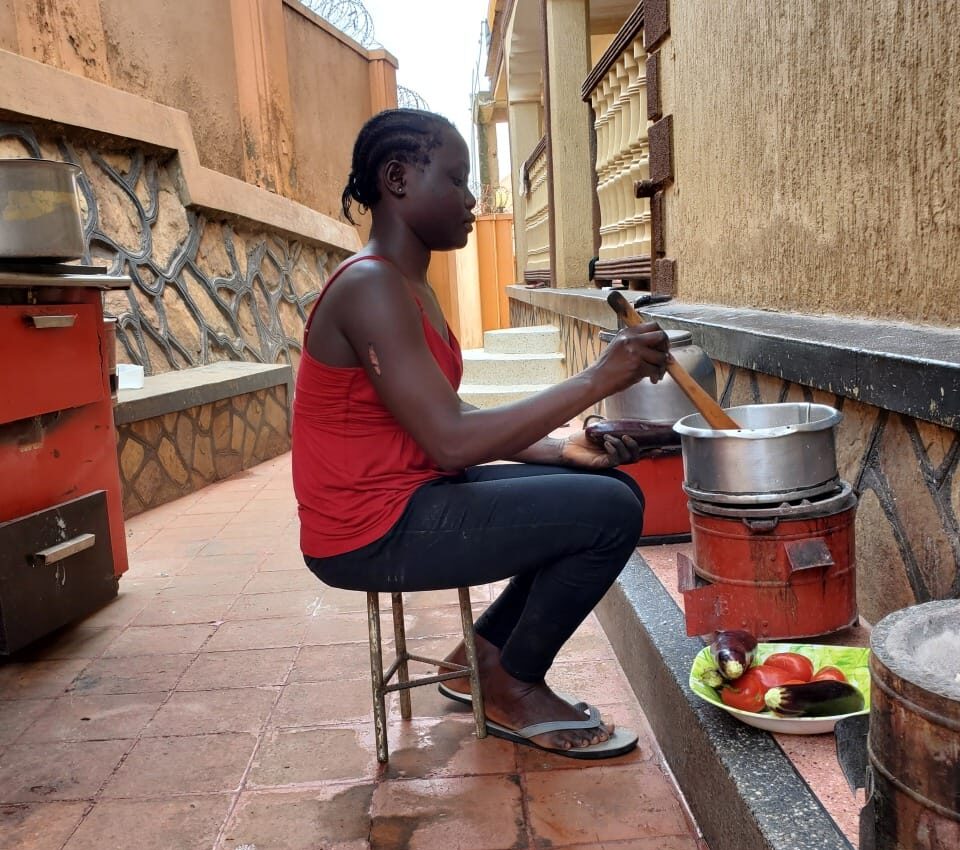
Clean cookstove programme. Authorized by Uganda's Ministry of Water and Environment.
Vintages 2025 to 2030
Standard Gold Standard GS23599
Uganda CP1 + CP2
Authorized10,000,000 tCO2e

Solar lighting, home solar systems and cookstoves, delivered with ALTECH Group.
Vintages 2023 to 2033
Standard Gold Standard GS12469
DR Congo CP1 + CP2
Authorized2,750,000 tCO2e
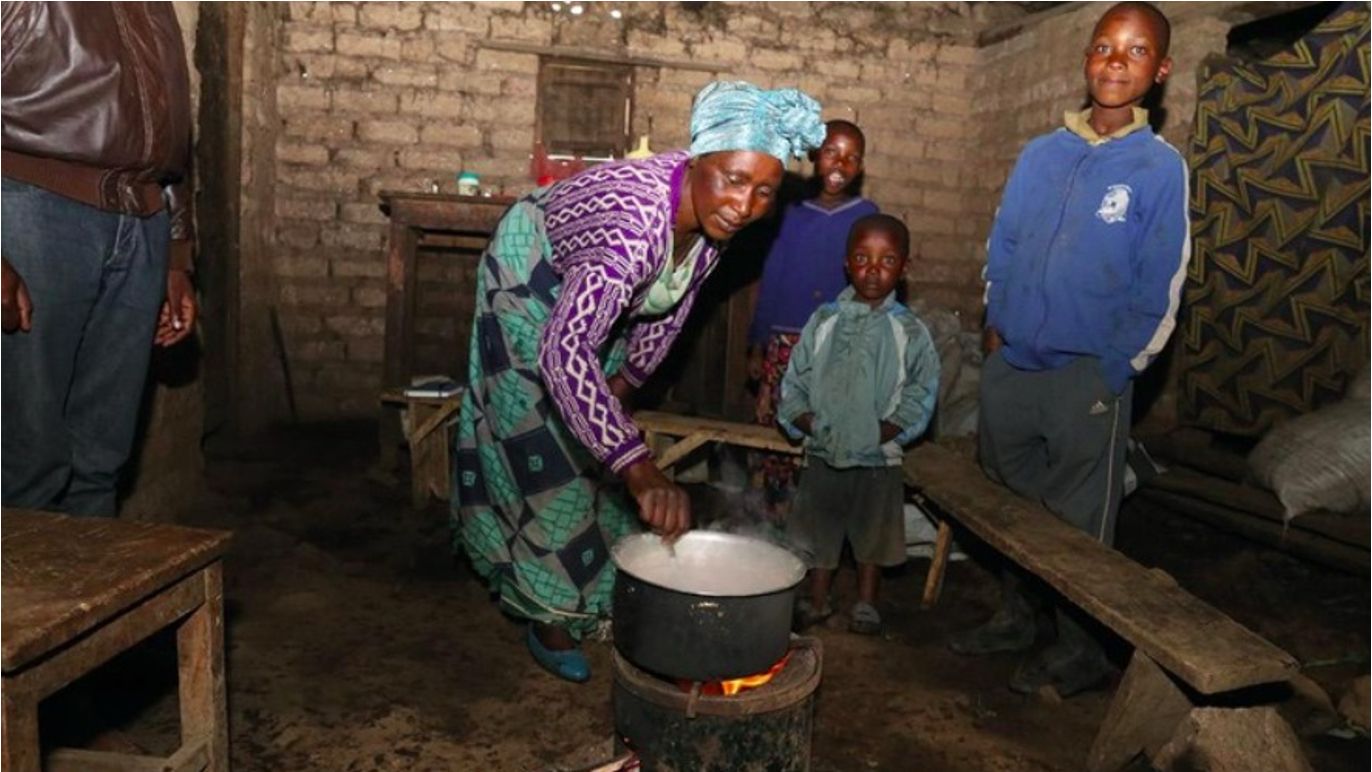
Improved cookstoves with local partner Likano. Authorized by the Rwanda Environment Management Authority.
Vintages Sep 2022 to Aug 2027
Standard Verra VCS2984
Rwanda CP1 + CP2
Authorized1,770,000 tCO2e
Which one fits depends on whether you are closing a known Phase 1 gap or building a position into Phase 2. The evidence standard is identical in all three, and volumes can be agreed as a range while you wait for the sector growth factor.
Volume reserved from a named project and vintage, delivered as tagged units on an agreed date.
PaymentStaged or prepaid
ProtectionReplacement guarantee
Issued and tagged units, transferred against payment on delivery.
StatusIssued and tagged
SettlementPay on delivery
Indicative term sheet into an ERPA, with staged payment, upside share above the floor and a long stop date. Direct participation in the underlying project is possible on request.
HorizonPhase 2 vintages
PaymentStaged by milestone
ICAO and IATA numbers, not ours. Use them to benchmark whatever else is on your desk. We track the market daily, including the ICE CORSIA Phase 1 reference, and are happy to talk through what it means for your position.
The share of covered emissions to be offset. ICAO, published Nov 2025. The factors for 2025 and 2026 are still to come.
In 2026, up from 126 at the start of Phase 1, and 134 already confirmed for 2027. ICAO, Sep 2026.
Programmes approved by the ICAO Council to supply units for Phase 1, four of them so far for 2027 to 2029. Ours are Gold Standard and Verra.
Eligible units covering 2024 to 2026 must be cancelled by this date. ICAO, Annex 16 Volume IV.
Phase 1, 2024 to 2026
Demand: ICAO Phase 1 estimate (Mar 2025) and IATA CORSIA fact sheet (Jun 2026). Supply: 43.9 million units verified, issued and labelled as CORSIA eligible by the approved programmes, per the ICAO CORSIA dashboard as of 29 September 2026, where Verra data is temporarily not being updated. For 2027 to 2035, ICAO estimates 880 to 1,350 million tonnes. Estimates differ by source and date.
The short version of the scheme.
Operators emitting more than 10,000 tonnes of CO2 per year from international flights with aircraft above 5,700 kg maximum take-off mass. Domestic flights stay outside the scheme, and humanitarian, medical and firefighting flights are exempt.
Offsetting applies where both the departure and the arrival State take part: 130 States in 2026, rising to more than 130 from 1 January 2027 when the second phase begins and participation becomes mandatory for most States, covering close to 90 per cent of international aviation emissions. All international emissions are monitored, reported and verified every year regardless.
ICAO measures the sector against a baseline of 85 percent of 2019 and publishes one growth factor per year. Covered emissions times that factor is your requirement. For 2024 it is 15.4 percent. CORSIA eligible fuels reduce it.
Questions buyers ask.
Econetix supplies CORSIA Eligible Emissions Units for the First Phase (2024 to 2026) and for the first compliance period of the Second Phase (2027 to 2029). Eligibility is set per compliance period by three things: the crediting programme, the vintage of the emission reduction, and the methodology used. All Econetix CORSIA projects are certified under Gold Standard or Verra, both approved by ICAO for the First Phase and for 2027 to 2029. Because ICAO’s vintage windows overlap, units from reductions between 2021 and 2026 can be cancelled against either period. Econetix confirms the applicable compliance period for each delivery in writing before contracting.
A Letter of Authorization is the host country’s permission for a project’s credits to be used under CORSIA, together with the commitment to apply a corresponding adjustment so the reduction is not counted twice. Without it a credit cannot be tagged as a CORSIA Eligible Emissions Unit, whatever its quality. Econetix holds four, covering 14.5 million tCO2e in total: the Democratic Republic of the Congo, 750,000 tCO2e, the first Letter of Authorization the DRC ever issued; Rwanda, July 2026, 1.77 million tCO2e; Uganda, July 2026, 10 million tCO2e; and a DRC extension in August 2026 of a further 2 million tCO2e. Authorisation, not project supply, is the real constraint in this market: of the roughly 300 million potentially eligible credits issued to date, only around 13 per cent carry the CORSIA tag, because host countries have been slow to authorise and to report the corresponding adjustment.
Econetix secures the corresponding adjustment through one of the two routes recognised by ICAO-approved programmes. Either the host country reports the adjustment in its Biennial Transparency Report to the UNFCCC, or the adjustment is backed by an approved political risk insurance policy that replaces the units if the host country does not adjust. The DRC and Uganda are both preparing their next Biennial Transparency Report for submission by the end of 2026. Econetix documents which route applies to each delivery. Once a unit carries the CORSIA label, that label cannot be removed, even if a host country later withdraws its authorisation.
Five steps. The project activity has to meet ICAO’s eligibility criteria. It has to be certified under an ICAO-approved programme using an approved methodology. The host country has to issue a Letter of Authorization permitting use under CORSIA. The corresponding adjustment has to be secured, either through the host country’s Biennial Transparency Report or through approved political risk insurance. The programme then tags the unit as a CORSIA Eligible Emissions Unit. Econetix runs the carbon side of all five steps itself, alongside the local partner operating the project on the ground, which is why status and timing are known rather than estimated.
From the current portfolio Econetix expects to issue roughly 280,000 CORSIA Eligible Emissions Units for the First Phase and roughly 3.7 million for the 2027 to 2029 period, with annual issuance above one million credits from 2027 onwards. Availability is confirmed per project and per vintage. The cancellation deadline for the First Phase is 31 January 2028. Econetix contracts forward against a delivery schedule, so volumes are secured well before that date rather than sourced in a tightening market shortly before it.
Econetix sells from the projects it develops and manages, not from the secondary market, and is not a broker. Econetix’s role varies by project, from developing and financing the whole project through to taking on the carbon component alone, and in every case Econetix holds the commercial inventory and the exclusive sales mandate. Operations on the ground are run by local project partners in each host country. Buyers therefore contract directly with the party that controls issuance and delivery, which is what makes binding delivery commitments possible.
Econetix projects are registered under Gold Standard, Verra and Puro.earth. The CORSIA portfolio sits under Gold Standard and Verra, both approved by ICAO for the First Phase and for the 2027 to 2029 compliance period. Every project can be verified in the public registry by its ID, for example GS12470 for solar lighting in the DRC, GS12620 for improved cookstoves in the DRC, GS23463 for solar lighting in Uganda, VCS 2984 for improved cookstoves in Rwanda and GS23529 for floating solar in the Maldives.
Econetix provides, with each delivery: the project documentation and registry link, the Letter of Authorization, evidence of the corresponding adjustment route, the CORSIA tag confirmation from the programme, and the retirement records in the buyer’s name. Buyers also get access to the Econetix dMRV platform for the projects they buy from. The intention is that a procurement or compliance team can verify a delivery in minutes instead of commissioning a review.
Eligibility, tagging, payment structure or a long term offtake for Phase 2. A CORSIA specialist replies directly, not a sales queue.


Analytics: Google Analytics 4 measures website usage. Marketing: HubSpot and Apollo support forms and lead attribution; protected HubSpot forms may also load Google reCAPTCHA. External media: Google Maps embeds load only when allowed.