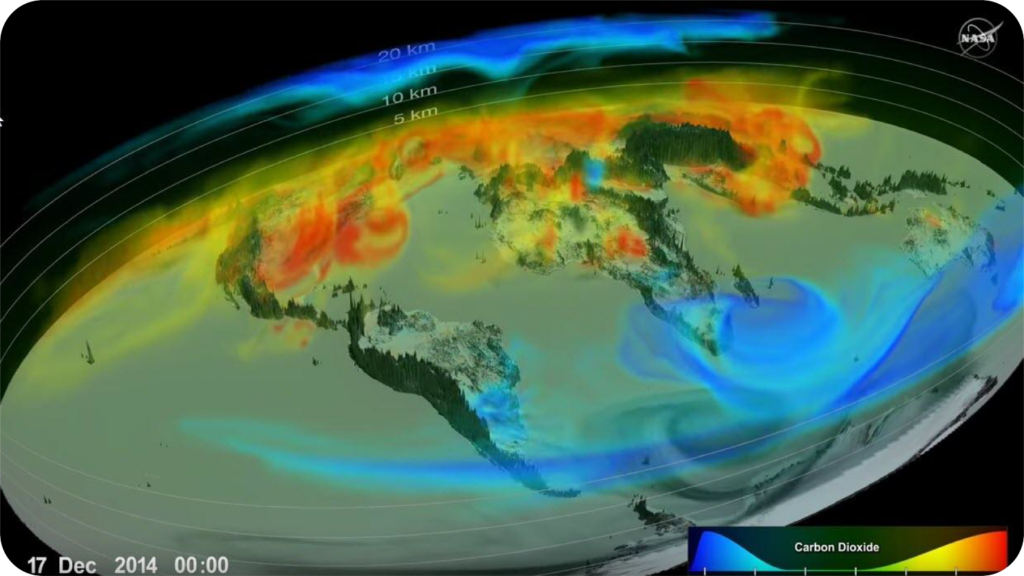
2024 marked a sobering milestone for our planet. According to the World Meteorological Organization (WMO), the concentration of carbon dioxide (CO₂) in the Earth’s atmosphere rose by the largest annual increase ever recorded since measurements began in 1957.
This wasn’t just another data point, it was a warning. The surge in greenhouse gases like CO₂, methane and nitrous oxide has never been higher, confirming what scientists have cautioned for years. Climate change is accelerating faster than our current efforts to contain it.
WMO experts report that since the 1960’s, the yearly increase in atmospheric CO₂ has tripled. From 2023 to 2024 alone, concentrations rose by 3.5 parts per million (ppm), reaching a global average of 423.9 ppm, nearly 50 percent higher than the previous year’s increase.
The cause isn’t limited to fossil fuel use. Forest and bush fires combined with the declining ability of oceans and forests to absorb CO₂ have made the atmosphere more volatile than ever. “The role of the oceans is crucial,” explains WMO greenhouse gas expert Oksana Tarasova. “They absorb about a quarter of our emissions but as they warm, they lose that capacity.”
The Earth’s natural carbon is sinking. Forests and oceans have long shielded us from the full brunt of emissions. But rising temperatures are breaking that balance. In 2024, the El Niño weather pattern worsened droughts in South America and Africa, fueling wildfires and reducing vegetation’s ability to capture carbon.
That same year was also the hottest on record since industrialization began with global temperatures averaging 1.55 °C above pre-industrial levels. Ocean heat reached unprecedented depths, literally.
Roughly half of all CO₂ emissions remain trapped in the atmosphere, while the other half is absorbed by land and sea. But as the planet warms, that balance tilts. “Warm water can’t hold as much carbon, just like a soda that goes flat when left in the sun,” says Tarasova.
And the land is struggling too. Vast forest fires across southern Europe, North America and the Amazon released millions of tons of carbon, with the Amazon alone burning over 50 percent more area than in typical years.
Each CO₂ molecule, Tarasova notes, “is like a tiny heater absorbing and radiating heat back into the atmosphere. The more molecules, the hotter our world becomes.”
While science paints a serious picture, solutions are within reach. That’s where climate-tech innovators and carbon-offsetting companies like Econetix are stepping in.
Econetix helps organizations measure, reduce and offset their carbon footprints through verified carbon credit programs that fund reforestation, renewable energy and sustainable development projects worldwide. By transforming emissions into measurable climate action, Econetix enables businesses to take responsibility while supporting the planet’s natural recovery systems.
As governments and industries struggle with the reality of surpassing the 1.5 °C threshold, the message is clear: collective, data-based, and market-driven action must scale immediately.
Because while 2024 may have been the warmest year on record, it can also be the year that sparked a turning point, if we choose it to be.
1 million trees have been planted in a restoration effort in the DRC. (Source: Axel Fassio, CIFOR)